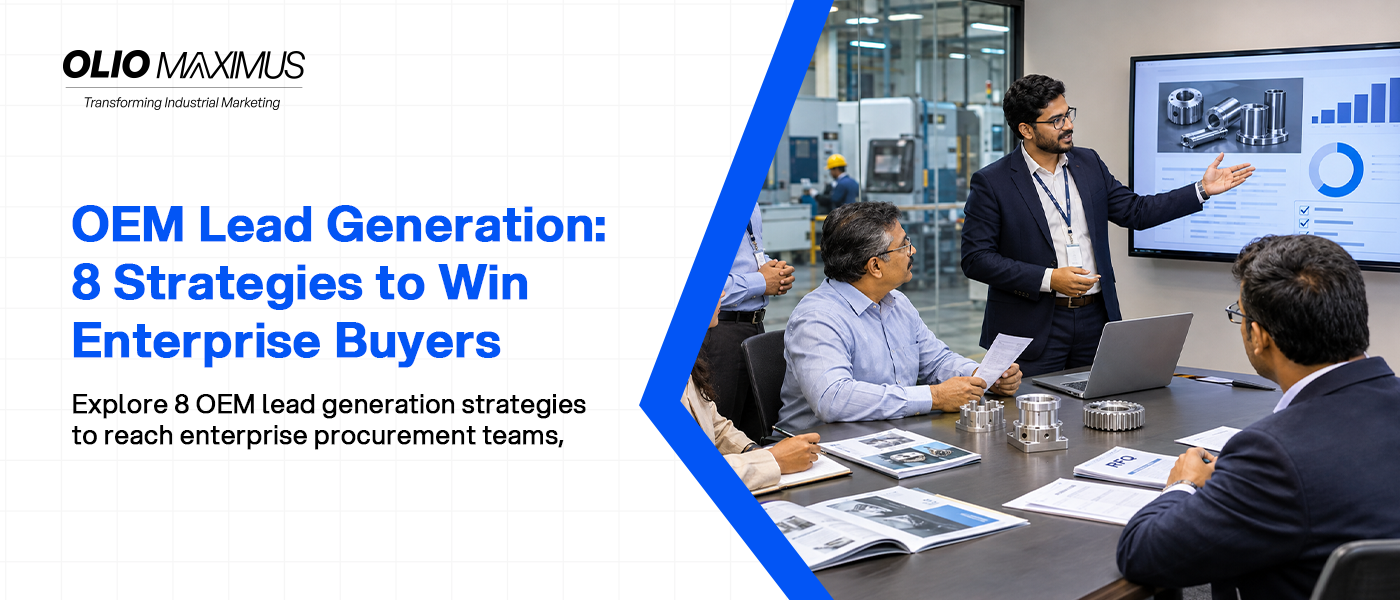
Winning business from large OEMs rarely happens through a single sales call or marketing campaign. Enterprise procurement teams evaluate suppliers across technical capability, quality, reliability, commercial viability and long-term fit.
For manufacturers trying to become OEM suppliers, the challenge is not simply finding a procurement manager's contact details. It is identifying the right accounts, reaching the people involved in supplier selection, demonstrating why your business is a credible fit and staying visible throughout a lengthy buying process.
Effective OEM lead generation requires a coordinated approach to industrial prospecting, B2B outreach, digital visibility and sales follow-up.
For example, a manufacturer producing precision-engineered components may have the capacity and technical expertise to supply large automotive OEMs. However, without identifying relevant accounts, understanding their sourcing requirements and demonstrating manufacturing capabilities, those opportunities may remain undiscovered.
The objective is to move beyond collecting contacts and build relationships with businesses that have genuine potential to become long-term customers.
Here are eight strategies to help manufacturers build a stronger pipeline of enterprise OEM opportunities.
The 8 Strategies for OEM Lead Generation
Strategy | Primary Objective |
|---|---|
01. Target OEM Account Selection | Identify manufacturers with relevant sourcing requirements. |
02. Buying Committee Mapping | Reach the stakeholders involved in supplier selection. |
03. Account-Specific Research | Make outreach relevant to each potential OEM. |
04. Manufacturing Credibility | Demonstrate technical and production capabilities. |
05. Digital Visibility | Build recognition through LinkedIn and search. |
06. Technical Content | Help OEMs evaluate your manufacturing expertise. |
07. Integrated Lead Generation | Combine outbound prospecting with inbound marketing. |
08. Structured Follow-Up | Maintain engagement throughout longer procurement cycles. |
1. Build a Target OEM Account List, Not a Broad Prospect Database
More contacts do not necessarily mean more qualified opportunities.
A database containing thousands of manufacturing companies may generate outreach activity, but many of those businesses may not have the right applications, purchasing requirements, production volumes or supplier needs for your capabilities.
Start by defining the OEMs you are best equipped to serve.
Evaluate potential accounts based on:
- Industry and product category.
- Manufacturing requirements.
- Component or equipment requirements.
- Production scale and capacity fit.
- Geographic markets served.
- Potential order value and long-term opportunity.
- Existing supplier relationships and sourcing requirements.
Build a prioritised account list rather than prospecting every company that loosely fits your industry.
OEM Target Account Prioritisation Framework
Evaluation Factor | What to Assess |
|---|---|
Industry Fit | Does the OEM operate in an industry your manufacturing capabilities serve? |
Product Requirements | Does the company require components, equipment or services you provide? |
Production Scale | Can your manufacturing capacity support its requirements? |
Technical Compatibility | Do your processes and capabilities match its specifications? |
Geographic Fit | Can you serve the OEM's operating locations? |
Commercial Potential | Is there a realistic long-term business opportunity? |
Supplier Requirements | Can your business meet relevant sourcing and qualification expectations? |
This assessment helps sales teams distinguish between general prospects and accounts worth investing time in.
Key Insight
A focused list of relevant OEM accounts is more valuable than a large database of companies with no verified requirement for your manufacturing capabilities.
2. Map the Entire Enterprise Buying Committee
An OEM opportunity rarely depends on one person.
Procurement may manage commercial terms and supplier onboarding. Engineering evaluates technical suitability. Quality teams review compliance and process reliability. Operations may assess whether the supplier can meet production requirements.
Enterprise purchasing decisions involve far more than procurement alone.
Forrester's 2026 State of Business Buying research found that a typical B2B buying decision involves 13 internal stakeholders and nine external influencers. This highlights the complexity of reaching and influencing the full buying group.
Your prospecting strategy should reflect this reality.
Identify the people who influence supplier selection at each target account, including:
- Procurement and strategic sourcing.
- Engineering and design.
- Manufacturing and operations.
- Quality and supplier development.
- Senior leadership, where relevant.
Understanding the OEM Buying Committee
Stakeholder | What They Evaluate | Information They Need |
|---|---|---|
Procurement Manager | Pricing, sourcing and supplier reliability | Commercial terms and supplier credentials |
Engineering Manager | Technical suitability and specifications | Engineering capabilities and technical documentation |
Quality Manager | Quality systems and compliance | Certifications and inspection processes |
Operations Manager | Production capacity and delivery | Manufacturing capacity and operational capabilities |
Senior Management | Strategic and commercial value | Business case and long-term supplier value |
Don't rely entirely on a single contact. If your conversation reaches procurement but technical teams have not evaluated your capabilities, the opportunity may not progress.
Build familiarity across the buying group, adapting your messaging to each role's priorities.
3. Use Account-Specific Research to Make Your Outreach Relevant
Generic cold emails are easy to ignore because they give recipients no compelling reason to respond.
Before contacting an OEM, research the business, its products, manufacturing operations, supplier requirements and potential areas where your capabilities may be relevant.
Look for useful signals such as:
- New product launches.
- Facility expansion or production investments.
- Changes in product portfolio.
- New sourcing requirements.
- Supplier development initiatives.
- Engineering or procurement hiring.
- Relevant operational challenges.
Use this information to build a credible reason for reaching out.
Instead of sending a generic introduction about your manufacturing capabilities, connect your offering to a specific application, product category or requirement that may be relevant to the OEM.
For example, a precision machining company approaching an automotive OEM could highlight its experience with similar component categories, machining processes and quality requirements.
The objective is not to pretend you know the company's problems. It is to demonstrate that your outreach is based on genuine research rather than a mass mailing.
Tip
Before approaching an OEM, identify one specific reason why your manufacturing capabilities may be relevant to its product portfolio or sourcing requirements.
4. Demonstrate Technical and Manufacturing Credibility
Enterprise OEMs don't look for suppliers who merely claim to deliver quality. They need evidence that a supplier can consistently meet technical, production, and commercial requirements.
Your marketing and sales materials should make this evidence easy to evaluate.
Show relevant information such as:
- Manufacturing processes and capabilities.
- Equipment and production capacity.
- Quality management systems and certifications.
- Material and component expertise.
- Testing and inspection processes.
- Engineering and customisation capabilities.
- Relevant industry experience.
- Production and delivery capabilities, where verified.
Avoid presenting every capability as equally important. Prioritise the information that directly supports the type of OEM opportunity you want to win.
When buyers can assess your capabilities before engaging your sales team, conversations become more focused on fit and requirements.
What OEM Buyers Need to See Before Shortlisting a Supplier
Credibility Element | What It Demonstrates |
|---|---|
Manufacturing Capability Profile | Processes, equipment and production expertise |
Quality Certifications | Established quality management practices |
Technical Documentation | Ability to address engineering requirements |
Project References | Relevant manufacturing experience |
Production Capacity | Ability to support expected requirements |
Customer Case Studies | Evidence of successful project execution |
Key Insight
Enterprise OEMs need more than promises. Give them verifiable information that helps them evaluate your business as a potential supplier.
5. Use LinkedIn and Search to Build Visibility Before Outreach
Enterprise buyers increasingly research potential suppliers before contacting them.
Your company website, search visibility, LinkedIn presence and published content all influence whether your business appears credible when a potential OEM evaluates you.
Therefore, build visibility around the capabilities, applications and industries you want to attract.
This includes:
- Optimising capability and product pages for relevant search terms.
- Publishing technical and application-focused content.
- Maintaining an active, credible LinkedIn company presence.
- Sharing manufacturing insights, project examples and capabilities.
- Ensuring your website answers supplier evaluation questions.
Outbound outreach becomes more effective when prospects can independently verify your business and find relevant information after receiving your message.
How Different Digital Channels Support OEM Discovery
Channel | Role in OEM Lead Generation |
|---|---|
SEO | Helps OEM buyers discover relevant manufacturers through search. |
Builds familiarity with procurement and engineering stakeholders. | |
Technical Content | Demonstrates manufacturing and application expertise. |
Paid Search | Reaches buyers actively searching for relevant suppliers. |
Company Website | Provides information for supplier evaluation. |

Search Engine Optimization (SEO)
Industrial buyers thoroughly research before they buy. Is your company visible when they evaluate options?
Quick Quiz: Test Your OEM Lead Generation Knowledge
Why should manufacturers build visibility across LinkedIn and search before contacting enterprise OEMs?
Feedback
Enterprise buyers often research potential suppliers before engaging. Strong digital visibility and credible manufacturing information help establish familiarity and support supplier evaluation.
6. Create Content That Helps OEMs Evaluate Your Business
Enterprise procurement teams need more than a company brochure.
Different stakeholders require different information before they are comfortable considering a new supplier. Engineering may need technical details. Procurement may need a clear understanding of your supply capabilities. Quality may need to assess your processes and certifications.
Create content that supports these evaluation stages.
Useful OEM-focused content could include:
Manufacturing Capability Profiles
Showcase production processes, equipment, materials, engineering expertise and manufacturing capacity.
Technical Specification Sheets
Provide relevant product specifications, component details, material information and technical capabilities.
Process and Quality Documentation
Explain manufacturing processes, inspection procedures, quality systems and relevant certifications.
Application-Specific Case Studies
Demonstrate how your business has addressed manufacturing requirements for previous customers.
Product and Component Capability Pages
Create dedicated website pages explaining the components, products and services you manufacture.
Industry-Focused Solution Pages
Explain how your capabilities support specific sectors and manufacturing applications.
Your content should reduce uncertainty about working with your business.
A useful resource can also give your sales team a reason to continue the conversation after the initial outreach, instead of relying on repetitive follow-up messages.
Key Insight
Your content should help OEM stakeholders answer an important question: Can this manufacturer meet our technical, operational and commercial requirements?
7. Combine Outbound Prospecting with Inbound Lead Generation
Outbound prospecting helps you proactively approach target OEMs. Inbound marketing helps potential buyers discover your business while researching suppliers.
Relying exclusively on either can limit your acquisition opportunities.
Build an integrated OEM marketing strategy around complementary channels:
Channel | Role in OEM Lead Generation |
|---|---|
Targeted Email Outreach | Introduces your capabilities to relevant accounts. |
Builds familiarity and connects with buying stakeholders. | |
SEO | Captures buyers researching suppliers and manufacturing capabilities. |
Paid Search | Targets active searches with commercial intent. |
Website Content | Supports evaluation and builds supplier confidence. |
Sales Follow-Up | Converts interest into technical or commercial conversations. |
These channels should work together rather than operate independently.
For example, a target account may first encounter your company through outbound outreach, revisit your website after seeing a LinkedIn post, review your capabilities and eventually respond to a sales follow-up.
That is why industrial lead acquisition should be measured at the account and opportunity level, not simply by individual campaign responses.
Outbound vs Inbound OEM Lead Generation
Outbound Lead Generation | Inbound Lead Generation |
|---|---|
Proactively identifies and approaches target OEMs. | Attracts OEM buyers researching suppliers. |
Uses account research and direct outreach. | Uses SEO, content and digital visibility. |
Targets selected decision-makers. | Reaches buyers through relevant search and content. |
Creates opportunities through direct engagement. | Builds interest through useful information. |
Requires structured follow-up. | Requires lead capture and qualification. |
Combining both approaches creates more opportunities to engage potential OEM customers throughout their buying journey.
Integrated Marketing Services | Olio Maximus
If your marketing channels are working separately, they are missing the chance to support each other. You can either coordinate them or let them compete for the same budget. Olio MaXimus creates integrated marketing services for B2B companies, making sure each channel supports the others and helps move qualified buyers forward.
8. Build a Follow-Up System for Long Procurement Cycles
A prospect who does not respond today may still become a valuable OEM opportunity months later.
Enterprise procurement cycles can involve supplier evaluation, technical discussions, internal approvals, budgeting, vendor registration and formal RFQs. A single follow-up email is unlikely to cover that journey.
Create a structured follow-up process based on the account's engagement and potential value.
Your process could include:
- A sequence of relevant outreach rather than repetitive reminders.
- Sharing technical or application-specific resources.
- LinkedIn engagement with key stakeholders.
- Follow-up after meaningful account signals.
- Periodic capability updates.
- Tracking conversations and next steps in your CRM.
- Re-engaging accounts when new requirements or opportunities emerge.
Sales and marketing should share visibility into which accounts have been contacted, which stakeholders are engaged, what information has been shared and what the next action should be.
The goal is to maintain relevance without overwhelming procurement teams with unnecessary messages.
Tip
A non-responsive OEM prospect is not automatically a lost opportunity. Use relevant technical updates, account research and meaningful follow-ups to maintain visibility throughout the procurement cycle.
OEM Lead Generation Readiness Checklist
Use this checklist to assess whether your current approach is prepared to attract and convert enterprise OEM opportunities.
Is Your Business Ready to Win More OEM Customers?
0 of 10 completed
Need help reaching the right OEM buyers?
Talk To Our TeamAssessment: If several areas remain unchecked, your OEM acquisition process may have gaps in account targeting, supplier positioning, lead generation or sales follow-up.
Start by prioritising the improvements that help your business reach the right OEM accounts and demonstrate its suitability as a manufacturing partner.
How Olio Maximus Helps Manufacturers Generate Qualified OEM Opportunities
Winning enterprise OEM business requires more than collecting contacts or sending cold emails.
Manufacturers need a coordinated strategy that connects target account identification, buyer engagement, digital visibility, technical credibility and sales follow-up.
Olio Maximus helps Industrial Manufacturers, OEM suppliers and Engineering Companies build structured B2B growth strategies through:
Account-Based Marketing: Identify high-value target accounts and develop focused engagement strategies.
Industrial SEO: Improve search visibility for relevant products, components, applications and manufacturing capabilities.
Content Marketing: Develop technical articles, capability profiles, industry guides and case studies that demonstrate expertise.
Demand Generation: Combine targeted outreach, LinkedIn, paid campaigns and inbound marketing to reach relevant buyers.
Lead Generation and Sales Enablement: Support lead qualification, appointment setting, follow-up and sales conversations.
By connecting these activities, Olio Maximus helps manufacturers move beyond disconnected prospecting campaigns towards a more structured approach to enterprise customer acquisition.
Build a More Focused OEM Lead Generation Strategy
Identify the right enterprise accounts, improve your manufacturing visibility, and create a structured approach to reaching procurement and engineering decision-makers.

Lead Generation & Sales Enablement
Generate Qualified Leads While Your Sales Team Gets Ready to Close Them
OEM Lead Generation Requires More Than Prospecting
Winning enterprise OEM business rarely comes from sending more emails or adding more contacts to a database.
It requires knowing which accounts are worth pursuing, understanding who influences supplier selection, demonstrating relevant manufacturing capabilities and building visibility before buyers are ready to engage.
The most effective OEM lead generation strategies connect industrial prospecting, digital marketing, targeted outreach, credibility-building and sales follow-up into one coordinated process.
That is what turns marketing activity into a pipeline of potential manufacturing partnerships.