Even with the right equipment, skilled engineers, and years of experience, a manufacturing company might still be difficult for potential customers to find when they search for a regional supplier.
A procurement manager may look for a component manufacturer near a production facility. An engineering company may need a specialist fabricator within a practical delivery radius. A plant manager may search for a local industrial equipment supplier that can provide installation and after-sales support.
If your business doesn't appear in those searches, potential customers may find competing suppliers first.
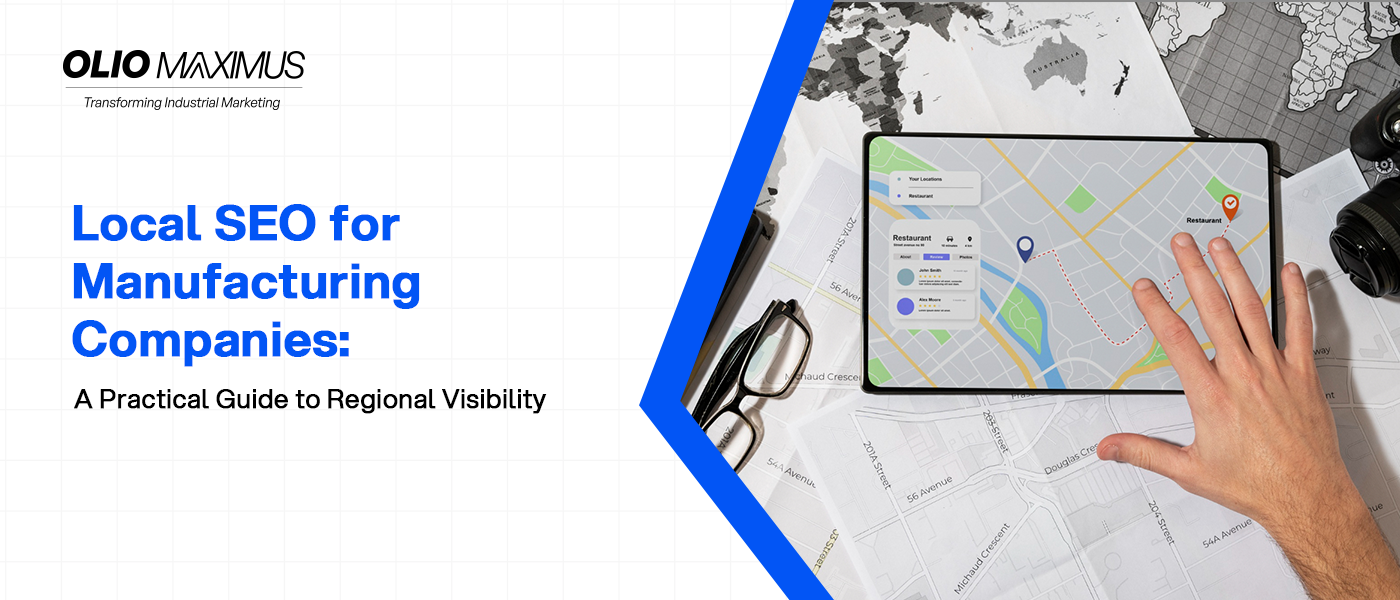
Local SEO helps manufacturers get noticed when industrial buyers look for products, capabilities, or suppliers in specific areas. This search engine optimisation strategy connects your website and business information with geographic searches that can generate genuine business opportunities.
However, Local SEO isn't equally important for every manufacturer.
Companies that serve customers worldwide through exports may need a different approach from businesses whose sales depend on regional distribution, installation, maintenance, or proximity to customers.
This guide explains how to identify local search opportunities, optimise your Google Business Profile, create useful manufacturing location pages, and build a regional SEO strategy that attracts qualified enquiries.
Local SEO for Manufacturers: The Key Areas to Focus On
A successful local SEO strategy combines several activities rather than relying on a single business listing or location page.
SEO Area | What Manufacturers Should Focus On |
|---|---|
Google Business Profile | Accurate business information, relevant categories and genuine customer reviews. |
Location Pages | Useful regional content highlighting actual capabilities and service coverage. |
Local Keyword Research | Product, service and location-specific search terms. |
Local Authority | Relevant industry listings, customer references and credible external mentions. |
Technical SEO | Search-friendly website structure and appropriate structured data. |
Performance Measurement | Regional traffic, enquiries, qualified leads and sales opportunities. |
These activities help search engines understand what your company offers and where your business can realistically serve customers.
What Local SEO Means for Manufacturers
Local SEO is the process of improving a business's visibility in search results associated with a geographic location. These results can include Google Maps, local business listings and relevant organic website pages.
For manufacturers, local search can involve queries such as:
- Industrial machinery manufacturers in Pune.
- CNC machining services near Chennai.
- Sheet metal fabrication companies in Ahmedabad.
- Packaging equipment suppliers in Hyderabad.
- Industrial maintenance services in a particular region.
These searches combine a product, capability or service with a location or an implied geographic need.
Local SEO helps search engines understand where your business operates, what you offer, and which geographic searches best match your company.
The strategy typically involves three connected areas:
Business Listing Optimisation: Keeping eligible business profiles accurate, complete and relevant.
Website Optimisation: Creating useful product, service and location pages that explain your capabilities and regional coverage.
Local Authority and Credibility: Building a consistent business presence through legitimate industry listings, customer reviews, relevant references and evidence of work in the markets you serve.
Local SEO is one part of a broader SEO strategy for industrial machinery manufacturers. It works alongside product and technical SEO to help buyers find suppliers in the right geographic areas.
Why Local SEO Matters in Industrial Markets
Industrial purchasing is not always driven by proximity. Buyers may source specialised machinery internationally or choose a supplier based on technical specifications, price, capacity or certification.
However, location can influence supplier selection when transportation costs, site visits, installation, maintenance, delivery timelines or regional support matter.
Capture Location-Specific Buyer Searches
A buyer searching for a generic product term may still be exploring available options. Someone searching for a specific capability in a defined industrial region may have more specific requirements.
For example, a company looking for precision machining services in its manufacturing cluster may be evaluating suppliers that can meet its tolerances, production volumes and delivery requirements.
A well-optimised website helps manufacturers appear in relevant searches by clearly explaining what they do and where they operate.
Make Regional Capabilities Easier to Verify
A location page can tell buyers more than where a facility is situated.
It can explain the processes performed there, the industries served, the products manufactured, the equipment available, and the areas covered by service teams.
This is particularly useful for manufacturers with multiple facilities, regional sales offices, distributors or dedicated service locations.
Support Trust During Supplier Evaluation
Industrial buyers need evidence that a supplier can meet their requirements.
Accurate business information, genuine facility photographs, relevant project examples and clear contact details help them evaluate a company.
Local visibility alone will not establish technical suitability. It can, however, help qualified buyers discover the information they need to make that assessment.
Reach Buyers Beyond Your Immediate City
Regional SEO allows manufacturers to target commercially relevant markets beyond the city where their headquarters are located.
A manufacturer might serve several industrial clusters across a state or country. It can create useful website content for those markets when geographic coverage reflects genuine business operations, delivery capability or customer demand.
The objective is to attract buyers from areas the company can realistically serve, not to create pages for every possible city.
Help the Right Industrial Buyers Find Your Business
Boost your regional search visibility and help nearby industrial buyers discover your products, capabilities and services.
Explore Olio Maximus SEO ServicesHow to Optimise Google Business Profile for Manufacturing Companies
A Google Business Profile can help eligible manufacturers appear in Google Search and Maps when buyers look for relevant businesses.
It is especially useful for manufacturers with a customer-facing facility, an eligible showroom or office, or a qualifying service operation that visits customers in person.
However, not every manufacturing company automatically qualifies for a profile. Google requires eligible businesses to make in-person contact with customers during their stated business hours. A virtual office or an address used only for mail does not establish eligibility.
Review Google's Business Profile eligibility and representation guidelines before creating or claiming a listing.
1. Choose the Most Accurate Business Category
Select the primary category that best describes what the business is, rather than listing every product or capability it offers.
For example, a manufacturer should choose the most accurate available category for its core business. Additional categories can be used when they genuinely describe other eligible business activities.
Do not add unrelated categories simply to target more searches.
2. Complete Your Business Information
Ensure that the profile contains accurate and current details, including:
- Business name as used in the real world.
- Correct address or eligible service area.
- Phone number and website.
- Relevant business hours.
- Appropriate primary and additional categories.
- A clear description of the business.
- Genuine photographs of the premises, products or operations.
Make sure your business name is accurate. Don't add city names, product keywords or promotional phrases if they aren't part of your actual business name.
3. Add Genuine Photographs and Relevant Updates
Images can help buyers understand your facility, equipment and operations before contacting you.
Where appropriate, use genuine photographs of:
- Factory exterior and premises.
- Showrooms and customer-facing facilities.
- Machinery and equipment.
- Manufacturing processes.
- Team and operations.
- Finished products.
Keep images current and representative of the business. Avoid stock photography presented as if it depicts your own facility.
You can also use eligible profile features to communicate useful business updates. Keep the information relevant to prospective customers rather than filling the profile with repetitive promotional messages.
4. Manage Customer Reviews Professionally
Reviews can give buyers useful context when evaluating a supplier's service and reliability.
Where appropriate, invite genuine customers to share honest feedback without offering incentives or selectively soliciting only positive reviews.
Respond professionally to reviews, including critical feedback. Avoid revealing confidential project information or customer details in public responses.
Industrial manufacturers might not get as many reviews as consumer businesses. That's why you should show other proof, like case studies, certifications, technical information and customer-approved testimonials, on your website.
5. Keep Multiple Locations Accurate
If your business operates several eligible locations, each profile should represent a genuine, distinct business location that meets Google's requirements.
Use accurate location-specific contact details and avoid creating duplicate profiles for the same operation.
If a facility is strictly a production site with no eligible customer interaction, don't assume it qualifies simply because the company owns or occupies the building. Check the eligibility rules before listing it.
Quick Quiz: Test Your Local SEO Knowledge
Which three primary factors does Google identify as influencing local search results?
Feedback
Google uses relevance, distance and prominence to help determine local search results. Manufacturers should focus on accurate business information, relevant website content and credible online visibility rather than relying on a single ranking tactic.
How to Build Effective Manufacturing Location Pages
A location page is a website page designed to explain your company's capabilities and relevance to a particular geographic market.
For manufacturers, it should help a buyer understand what the business offers in that area, which applications it supports and how to take the next step.
Just swapping out the city name in the same company description doesn't make a helpful location page.
1. Give Each Page a Clear Purpose
Start by identifying the actual business opportunity associated with the location.
A manufacturer might create pages for:
- A facility that serves a particular region.
- A regional service team that installs or maintains equipment.
- A genuine sales office supporting local customers.
- A capability that is commercially relevant to a specific industrial cluster.
- A distinct market where the company has established customers or delivery coverage.
The page should make clear how your business connects to the location. Don't suggest you have a local facility, office or team if you don't.
2. Include Information That Helps Buyers Evaluate You
A useful manufacturing location page should include the following elements where relevant.
Page Element | What to Include |
|---|---|
Location-specific title and introduction | Identify the relevant capability and geographic market. |
Products and manufacturing capabilities | Explain products, processes and services available to customers in that region. |
Industries and applications served | Show how your capabilities support relevant regional industries. |
Evidence of experience | Include relevant projects, certifications and customer outcomes that can be substantiated. |
Delivery and support information | Clarify service coverage, installation arrangements and delivery capabilities. |
Contact and enquiry options | Help interested buyers request specifications or discuss requirements. |
3. Use Local Keywords Naturally
Your primary keyword and related location terms should appear where they help readers understand the page.
For example, a page targeting CNC machining services in Pune could use that phrase in its title, introduction and relevant headings.
The rest of the content should explain the actual machining capabilities, materials, tolerances, industries served and regional coverage.
Don't repeat the city name in every heading or add lists of nearby locations unless there's a good reason.
Keyword relevance matters, but the page must also demonstrate that your company can meet the buyer's requirements.
4. Avoid Thin or Duplicate Location Pages
Creating many nearly identical pages wastes time and creates a poor user experience.
Before publishing a new page, ask:
- Is there a genuine business reason to target this location?
- Can we provide useful, market-specific information?
- Does the page serve a distinct buyer need?
- Do we have credible evidence of our relevance to this area?
- Is this page meaningfully different from existing product and service pages?
If not, it might be better to create a stronger regional service page or a detailed national capability page instead.
5. Use Structured Data Where Appropriate
Structured data helps search engines understand details about your business and its web pages.
Google provides guidance on LocalBusiness structured data, including properties such as business hours and address information where applicable.
Choose the schema type that truly matches your business and the page content.
Remember, structured data doesn't guarantee better search results, and you shouldn't use it for fake locations or details.
Local SEO Ranking Factors Manufacturers Should Understand
Google explains that local results are primarily influenced by relevance, distance and prominence.
Understanding these factors helps manufacturers prioritise work that can improve local visibility.
1. Relevance
Relevance refers to how well a business profile matches what someone is searching for.
Accurate categories, complete business information and a clear website presence help communicate what the company does.
For manufacturers, relevant product and capability pages can also help buyers and search engines understand the company's offering.
A generic homepage may not explain the specific industrial processes or equipment the business provides.
2. Distance
Distance refers to how far a business is from the location relevant to a search.
This matters because manufacturers can't control where someone is searching from or guarantee they'll appear in every city they serve.
A business may be highly relevant to a buyer's needs but not appear prominently in a map result when the searcher is far away.
This is one reason local SEO and organic regional SEO should be considered together. Website pages can help the business reach buyers researching regional suppliers beyond the immediate vicinity of its physical location.
3. Prominence
Prominence relates to how well-known a business is. Google considers information about the business across the web, including links and reviews, among other signals.
Manufacturers can support prominence by building a credible digital presence through:
- Relevant industry publications.
- Legitimate business directories.
- Customer reviews.
- Industry association listings.
- Useful technical content.
- Relevant external references.
Don't take shortcuts like buying reviews, making fake listings or getting irrelevant links. These actions can hurt your reputation and break platform rules.
For Google's explanation of these factors, consult its official guidance on how to improve your local ranking on Google.
Important: No single optimisation guarantees a particular local ranking. Search results vary by query, location, competition and other factors. Focus on improving the accuracy, relevance and credibility of your business information rather than chasing a guaranteed position.
Expert Tip
Don't Create Location Pages Just to Target More Cities.
Turn Regional Searches Into Business Enquiries
Build a stronger local SEO strategy that connects your manufacturing capabilities with relevant buyers across your target markets.
Explore SEO ServicesHow to Build a Regional SEO Strategy
Regional SEO expands your search strategy beyond a single business address. It helps your website reach buyers in the geographic markets your company can realistically serve.
For manufacturers, the strategy should connect location targeting with product capabilities, customer requirements and commercial priorities.
Step 1. Identify Your Priority Regions
Start with existing customers, sales data, delivery coverage and business expansion plans.
Determine which regions contain suitable target accounts and where your company has a credible reason to compete.
Consider factors such as:
- Freight costs.
- Installation requirements.
- Distributor coverage.
- Service response times.
- Availability of relevant industrial sectors.
- Existing customer locations.
A manufacturer supplying specialised machinery across several states may prioritise regions with strong demand from its target industries.
A service provider may focus on areas where it can respond to customer sites within a practical timeframe.
This kind of analysis keeps your regional SEO focused, so you're not just trying to target every city available.
Step 2. Research Location-Based Search Terms
Identify how buyers describe your products and services when searching for suppliers in those markets.
Search terms may combine:
- Product or equipment type.
- Manufacturing process or technical capability.
- Industry or application.
- City, region or industrial cluster.
- Service requirement or supplier type.
For example, a precision engineering company might evaluate terms related to CNC machining, component manufacturing and its priority industrial regions.
Use keyword research tools, Search Console data, and real customer enquiries to find out which terms matter.
Don't rely only on search volume to decide where to invest.
Step 3. Map Keywords to the Right Pages
Avoid making multiple pages compete for the same search intent.
A practical structure could look like this:
Search Intent | Suitable Page |
|---|---|
General company and capability searches | Main service or capability page |
Specific product or process searches | Product or process page |
Capability in a commercially relevant region | Regional landing page |
Facility-specific searches | Genuine location page |
Technical questions during supplier research | Educational article or technical guide |
For example, a manufacturer could maintain a core CNC machining page explaining its capabilities and a separate regional page for a market where it has relevant customers and a meaningful service proposition.
The regional page should offer information specific to that location, not just repeat what's on the main page.
Step 4. Strengthen Local Business Information Across the Web
Ensure your business details are consistent across your website, eligible Google Business Profiles and relevant industry directories.
Pay particular attention to:
- Business name.
- Address.
- Phone number.
- Website.
- Business categories and service information.
Update outdated listings when locations change, and avoid creating duplicate listings to target additional keywords.
Industry-specific directories, manufacturing associations and supplier listings can be useful when they are credible and relevant to your market.
Focus on accuracy and relevance instead of adding your business to every directory you can find.
Step 5. Build Regional Authority Through Useful Content
Create content that demonstrates your understanding of the industries and applications you serve.
This might include:
- Case studies from relevant markets.
- Technical guides for local industry requirements.
- Customer-approved project examples.
- Articles addressing common challenges regional buyers face.
- Application-specific manufacturing insights.
For example, a machinery supplier serving food processing businesses in a particular region could publish a project story explaining the application, technical constraints and solution delivered.
This way, potential customers get useful information to help them decide, rather than just seeing city names scattered across your website.
Regional SEO should fit with your overall industrial marketing strategy. You'll get better results when your content, positioning and enquiry process all support your main business goals.
How to Measure Local SEO Performance
A local SEO plan should link your search visibility to real business results.
Use Google Search Console, Google Analytics and eligible Business Profile performance data to understand how buyers discover and interact with your business.
Metric | What It Helps You Assess |
|---|---|
Local and regional search impressions | Whether your website appears for relevant geographic searches |
Search clicks and click-through rate | Whether your listings attract visitors from those searches |
Location-page traffic | Whether regional pages attract relevant visitors |
Business Profile interactions | How people interact with an eligible profile |
Calls and enquiry submissions | Whether search activity generates direct responses |
Qualified leads by region | Whether enquiries match your target market and capabilities |
Sales opportunities and pipeline | Whether local SEO contributes to commercial growth |
Establish a baseline before making significant changes.
Review results over time, accounting for seasonality, market conditions and changes in the business.
Separate general website traffic from real industrial enquiries. You might get fewer leads from a specific regional market, but those leads could be worth more than lots of irrelevant visits.
When possible, track which landing page and region each enquiry comes from in your CRM. This helps you understand which areas are worth investing in.
Local SEO Readiness Checklist for Manufacturing Companies
Use this checklist to assess whether your current local SEO strategy is helping industrial buyers discover your business across the right geographic markets.
Checklist: Is Your Manufacturing Business Ready for Local Search?
0 of 10 completed
Need Help Improving Your Regional Search Visibility?
Talk to Our TeamAssessment: If several areas remain unchecked, your local SEO strategy may have gaps in business information, regional targeting, website content or performance tracking.
Start with the improvements that make your manufacturing capabilities easier to discover and verify in the markets you want to serve.
How Olio Maximus Helps Manufacturers Improve Local and Regional SEO
Local SEO should connect your company's real manufacturing capabilities with buyers searching in commercially relevant markets.
Olio Maximus helps Industrial Manufacturers, OEMs and Engineering Companies improve search visibility through technical SEO, regional content strategy and integrated marketing.
Our approach focuses on:
Local SEO Strategy: Identify commercially relevant locations, search opportunities and regional priorities.
Google Business Profile Optimisation: Improve eligible business profiles through accurate information, appropriate categories and relevant content.
Location Page Development: Build useful regional landing pages that explain actual manufacturing capabilities and service coverage.
Technical SEO: Improve website structure, accessibility, indexing and search engine understanding.
Content and Authority Building: Develop technical articles, industry guides and credible project content that support search visibility.
Performance Measurement: Track regional visibility, website enquiries, qualified leads and commercial outcomes.
By connecting these activities, Olio Maximus helps manufacturers move beyond basic local listings and build a more structured regional search strategy.

Improve Your Industrial Search Visibility
Connect your manufacturing capabilities with relevant buyers through technical SEO, regional optimisation and content strategies built for industrial markets.
Build a Local SEO Strategy That Supports Manufacturing Growth
Local SEO works best for manufacturers when it matches how their business actually serves its market.
A company with an eligible customer-facing facility can use Google Business Profile to strengthen local discovery. A manufacturer serving multiple industrial regions can develop useful location pages and regional content. A specialist supplier with a national or international customer base may need to prioritise technical and product SEO alongside a more selective regional strategy.
The best approach depends on where your customers are, how they look for suppliers, and what makes your company stand out.
At Olio Maximus, we help industrial manufacturers, OEMs and engineering companies improve search visibility through technical SEO, relevant content and integrated marketing strategies built around business growth.