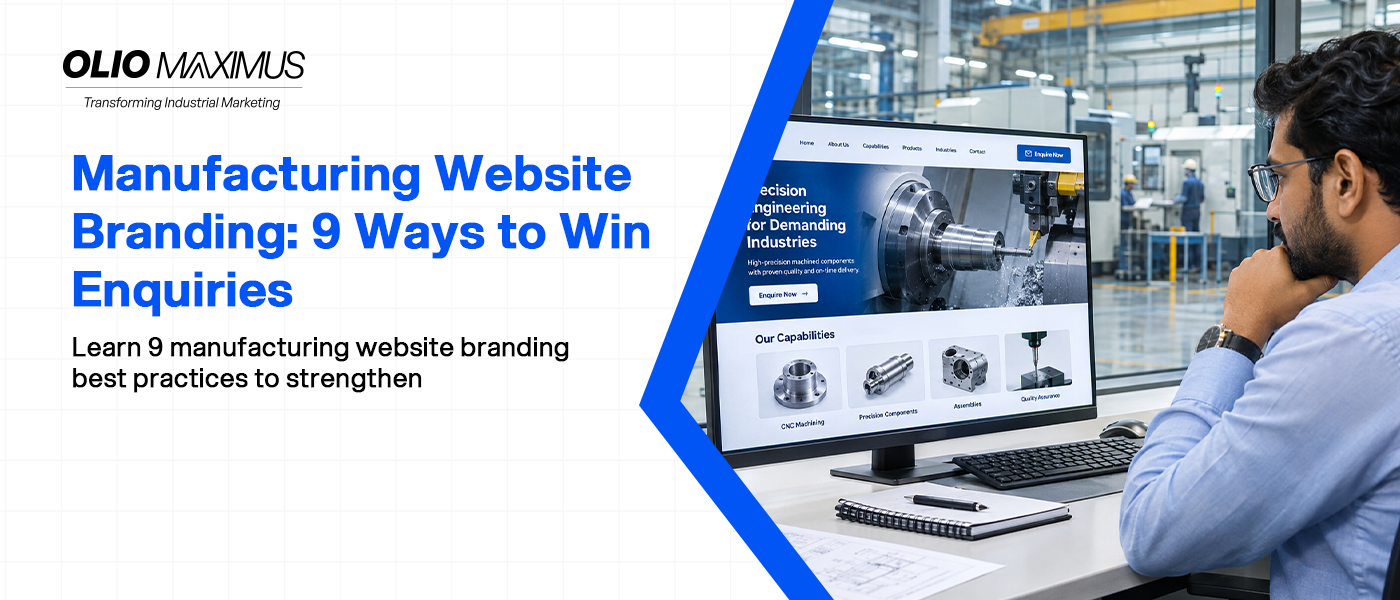
A manufacturing website can showcase impressive machinery, certifications, production capabilities and years of experience. Yet if visitors cannot quickly understand what the business offers, why it is different, or how it can meet their requirements, they may leave without making an enquiry.
Website branding isn't limited to colours, fonts, and logos. It influences how potential buyers perceive your business, understand your capabilities and decide whether you are worth contacting.
For manufacturers, an effective industrial brand website connects visual identity with commercial messaging, technical credibility and a user experience designed around the buyer.
A professionally branded website should do more than look attractive. It should communicate your value, demonstrate your expertise, and guide potential customers towards meaningful business conversations.
Here are nine best practices to make your website work harder for your business.
1. Make Your Brand Positioning Clear Above the Fold
The first section of your website should immediately communicate what your business does, who it serves, and why it matters.
Visitors should not have to scroll through generic statements such as "Committed to excellence" or "Engineering the future" to understand your offering.
Instead, your hero section should establish your positioning through:
- A clear description of your products, solutions or services.
- The industries or applications you serve.
- A meaningful differentiator.
- A relevant call to action.
For example, instead of leading with "Innovative Engineering Solutions," a manufacturer could communicate its expertise in designing and manufacturing automated packaging equipment for high-volume production environments.
Specific positioning gives visitors a reason to continue exploring.
Generic Brand Messaging vs Clear Industrial Positioning
Generic Website Messaging | Buyer-Focused Brand Positioning |
|---|---|
Committed to excellence | Manufacturing precision-engineered components for automotive applications |
Innovative engineering solutions | Custom automation systems for industrial production lines |
Quality is our priority | ISO-certified manufacturing with documented quality processes |
Your trusted manufacturing partner | Specialised manufacturing capabilities for demanding OEM requirements |
Key Insight
Your homepage should communicate what you manufacture, whom you serve, and what makes your capabilities relevant within the first few seconds.
2. Write Website Messaging Around Buyer Needs
Industrial buyers aren't visiting your website just to learn about your company. They are researching suppliers, comparing capabilities and looking for solutions to production, operational or procurement challenges.
Your website messaging should reflect those priorities.
Explain:
- What your products help customers achieve.
- The problems they address.
- The applications they support.
- The value your business brings to the purchasing decision.
Avoid filling pages with company-centric language that repeatedly describes your commitment, expertise and quality without explaining what those qualities mean to the buyer.
Strong website messaging connects your capabilities to the reasons customers buy.
For example, instead of simply stating that your company manufactures industrial conveyors, explain the production environments they support, the material-handling requirements they address, and the applications for which they are suitable.
This helps buyers understand your relevance without having to interpret generic promotional statements.
3. Present Your Capabilities as Business Solutions
A list of machines, product specifications or technical capabilities may demonstrate what you can manufacture. However, it doesn't always help visitors understand where your expertise fits their requirements.
Build your content around applications, industries, problems solved and outcomes supported by your capabilities.
For example, instead of simply listing conveyor systems, explain the production environments they support, the material-handling requirements they address and how buyers can identify the right configuration.
This approach makes your industrial website more useful to both technical evaluators and decision-makers who may not know the exact product they need.
Organise your capabilities into meaningful sections:
- Products and equipment manufactured.
- Custom engineering and manufacturing capabilities.
- Industries and applications served.
- Production processes and technologies.
- Technical specifications and performance information.
- Supporting services and after-sales capabilities.
The objective is to help buyers connect your manufacturing expertise with their actual business requirements.
4. Create a Consistent Brand Experience Across Every Page
Brand consistency is more than using the same logo throughout the website.
Your typography, colours, imagery, tone of voice, layouts and messaging should create a recognisable experience from the homepage to product pages, case studies and contact forms.
Inconsistent design can make a business appear fragmented. A modern homepage followed by outdated product pages, generic stock photographs or inconsistent messaging can weaken the overall impression.
Maintain consistency across:
- Brand colours and typography.
- Photography and visual style.
- Headlines and tone of voice.
- Button styles and calls to action.
- Layout patterns and page hierarchy.
Consistency helps visitors recognise your business and reinforces the impression of a well-organised, credible manufacturer.
For industrial businesses, real manufacturing photographs, equipment images, production environments and project visuals can also help communicate authenticity.
Your visual identity should support your positioning rather than distract from it.
5. Make Navigation Simple for Industrial Buyers
A potential customer should be able to find relevant information without navigating through unnecessary pages or confusing menus.
Organise your website around how buyers search for information.
Depending on your business, this may include:
- Products.
- Industries served.
- Applications.
- Manufacturing capabilities.
- Services.
- Technical resources.
- Projects and case studies.
- Company information.
Avoid hiding important capabilities under vague labels or creating too many navigation layers.
A well-structured website helps visitors move from understanding your business to evaluating your capabilities and eventually contacting your team.
The goal is not to make visitors explore every page. It is to help them reach the information relevant to their decision.
Your Website Should Reflect the Value Your Business Delivers
A website that communicates the right capabilities, builds credibility and guides buyers towards an enquiry can become a stronger part of your industrial growth strategy. Explore how Olio Maximus connects branding, website strategy and marketing to support business growth.
Discuss Your Website6. Build Trust Through Proof, Not Claims
Industrial buyers are evaluating risk as much as capability. They need confidence that your business can deliver, understands their requirements and has the experience to support their project.
Statements such as "industry-leading quality" or "trusted by customers worldwide" are weak without supporting evidence.
Use your website to demonstrate credibility through:
- Relevant case studies and project examples.
- Certifications and quality standards.
- Customer testimonials.
- Manufacturing capabilities and facilities.
- Industries and applications served.
- Technical documentation and product information.
Make these elements easy to find rather than confining all credibility-related information to a single About Us page.
For example, a manufacturer supplying precision-engineered components can showcase relevant projects, production capabilities, quality certifications and application experience on its product and capability pages.
Evidence gives potential buyers something concrete to evaluate before they contact your team.
Tip
Don't simply tell visitors that your company delivers quality. Show relevant projects, certifications, manufacturing capabilities and customer evidence that support the claim.
7. Design Pages Around the Next Action
Every important page should help visitors take a logical next step.
A product page may encourage a specification enquiry. A capability page may invite visitors to discuss a custom requirement. A case study may direct readers towards a similar solution.
Your calls to action should reflect the visitor's intent rather than repeating the same generic button everywhere.
Examples include:
- Request a Quote.
- Discuss Your Requirements.
- Download Technical Specifications.
- Explore Our Capabilities.
- Speak to Our Team.
Make these actions visible, relevant and easy to complete.
Avoid lengthy forms that ask for unnecessary information before a visitor can initiate a conversation.
The conversion path should feel like a natural continuation of the information the visitor has just explored.
Quick Quiz: Is Your Website Buyer-Focused?
What should an industrial website's primary call to action achieve?
Feedback
Effective calls to action help potential customers progress naturally from researching your capabilities to requesting information, discussing requirements or submitting an enquiry.
8. Make Technical Information Easy to Find and Understand
Technical information is essential to industrial buyers. But poorly organised specifications, dense paragraphs and difficult-to-read documents can create unnecessary friction.
Present complex information in a structured format that makes comparison and evaluation easier.
Use:
- Scannable product specifications.
- Clear headings and subheadings.
- Tables where comparisons genuinely help.
- Relevant diagrams, images and application examples.
- Downloadable technical documents when necessary.
Your website should accommodate both visitors who need a quick overview and technical evaluators who require detailed information.
For example, a machinery manufacturer can present key specifications in a structured table, followed by detailed explanations of applications, operating requirements and available configurations.
Good user experience does not mean removing technical depth. It means making that depth easier to access.
9. Keep Your Website Aligned with Your Sales Process
Your website should support the conversations your sales team actually has with potential customers.
If your sales team frequently receives enquiries about customisation, project feasibility, installation requirements, industry applications or technical specifications, your website should address these concerns before the first conversation.
Review common sales questions and objections. Use them to identify missing information, improve product pages, create useful resources and make enquiry forms more relevant.
This also helps marketing and sales work from the same understanding of customer needs.
When website content reflects real sales conversations, it becomes more than a branding asset. It can help qualify prospects, set expectations and make enquiries more productive.
Industrial Website Branding Readiness Checklist
Use this checklist to assess whether your website communicates your brand effectively and supports your business objectives.
Is Your Manufacturing Website Ready to Convert Visitors Into Enquiries?
0 of 10 completed
Need help improving your website branding?
Talk To Our TeamAssessment: If several areas remain unchecked, your website may have gaps in brand communication, buyer experience or enquiry conversion.
Start by prioritising the improvements that make your capabilities easier to understand and help potential customers take the next step.
How Olio Maximus Helps Build Stronger Industrial Brand Experiences
An industrial website should connect brand positioning, website messaging, technical credibility and marketing performance.
Olio Maximus helps Industrial Manufacturers, OEMs and Engineering Companies strengthen their digital presence through strategic branding, website positioning and integrated marketing.
Our approach focuses on helping businesses:
- Communicate their manufacturing capabilities clearly.
- Present products and applications around buyer requirements.
- Build a consistent and recognisable brand experience.
- Improve website navigation and content structure.
- Showcase technical expertise and customer proof.
- Create relevant enquiry paths for potential buyers.
- Connect website strategy with broader marketing objectives.
Build a Website That Communicates Your Manufacturing Expertise
Your website should do more than display your products. It should help industrial buyers understand your value, recognise your capabilities and feel confident about contacting your business.
Explore Olio Maximus Integrated Marketing ServicesBuild a Website That Creates Better Business Opportunities
Your website is often the first place potential buyers evaluate your manufacturing business.
Make sure it communicates your capabilities, differentiates your brand and supports your sales process.
A strong industrial brand website combines clear positioning, consistent visual identity, useful technical information and a user experience built around buyer behaviour.
At Olio Maximus, we help industrial businesses strengthen their digital presence through strategic branding, website positioning and integrated marketing.
The objective is to turn your website into a more effective business asset that communicates your expertise and supports meaningful enquiries.