Your website has been generating consistent organic traffic. Important service pages are ranking, enquiries are coming in, and your SEO investment is producing results.
But then, your search rankings begin to change.
Some pages lose visibility. Organic clicks decline. Competitors begin appearing above your website for searches that previously brought customers to you.
If you’ve noticed these changes recently, Google’s November 2026 core update deserves your attention.
Google began rolling out the update on 10 November 2026, marking its third core update of the year. The change applies globally and across all languages, with a rollout period of up to two weeks.
For businesses that depend on organic search for website traffic, enquiries, and customer acquisition, understanding this update matters.
Here is what Google has confirmed, what businesses should monitor, and how to respond if their search visibility changes.
What Could the November Core Update Mean for Your Website?
The immediate impact of a core update can appear through changes in organic search performance.
Some websites may gain visibility, while others may experience ranking declines. Individual pages and keywords can also move differently.
For businesses, these changes can have commercial consequences.
Consider a manufacturing company that ranks for searches related to industrial machinery, equipment suppliers and engineering services.
If important product pages lose visibility, fewer potential buyers may discover the company through Google. This can affect website visits, quotation requests and inbound enquiries.
However, a ranking decline does not automatically mean your website has been penalised or that your content violates Google’s guidelines.
Google explains that core updates do not target specific websites or individual pages. Its systems reassess content across the web as search expectations and available information evolve.
A page can lose its position because other pages are now considered more relevant or useful for a particular search.
This difference is important when you decide what to do next.
Five Things Businesses Should Check After the Update
The November 2026 Google update is a reason to review your search performance, but not to start making unnecessary website changes.
Google recommends waiting until the rollout is complete before evaluating its impact.
Here are five areas to examine.
1. Monitor the Update Rollout Before Drawing Conclusions
First, confirm whether Google has completed the November core update.
Check the Google Search Status Dashboard for the official completion announcement.
Avoid making significant SEO decisions based on short-term ranking fluctuations while the rollout is still underway.
Temporary movement during an update does not necessarily indicate a lasting change in search visibility.
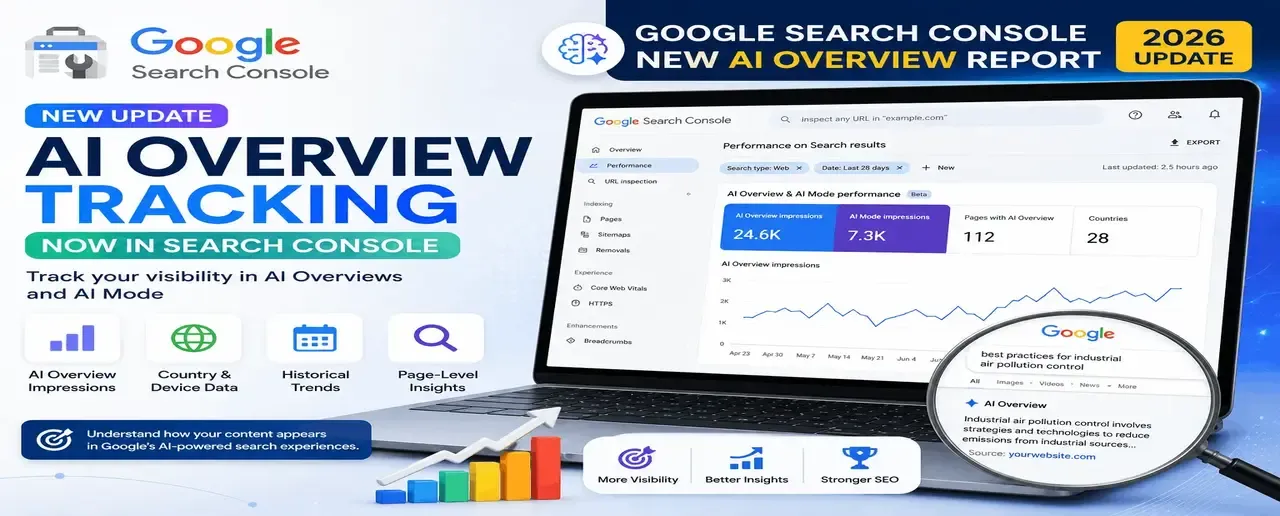
2. Compare Organic Search Performance in Google Search Console
Once the rollout is complete, give Google’s systems at least one full week before conducting a detailed assessment.
Google recommends comparing Search Console performance for the week after the update finishes with the week before the rollout began.
Look at:
- Total organic clicks and impressions.
- Average search positions.
- Pages experiencing significant traffic changes.
- Keywords that have gained or lost visibility.
- Changes across different search types.
You can use Google Search Console to examine this data.
Note
Pay attention to big changes, not small ups and downs. If a page is still doing well, a small drop in average position doesn’t mean you need to rewrite it.
3. Identify Which Pages Have Lost Visibility
A decline in overall website traffic doesn’t tell you where the problem lies.
Look at individual pages to see which parts of your website are affected.
For example:
Affected page | What to investigate |
|---|---|
Product pages | Does the content adequately explain specifications and applications? |
Service pages | Does the page clearly communicate capabilities and value? |
Blog articles | Does the content satisfy the search intent? |
Industry landing pages | Does the information address the needs of that specific audience? |
High-converting pages | Have important rankings or search queries changed? |
Also check if the drop is only happening for certain topics, keywords, or types of searches.
This helps you tell if it’s a bigger visibility problem or just a few pages being affected.
4. Review Content Quality and Search Intent
Google’s core update guidance emphasises helpful, reliable, and people-first content.
That’s why reviewing your content is a key part of checking your SEO after an update.
Ask the following questions:
- Does the page directly answer what the searcher wants to know?
- Is the information accurate, relevant and sufficiently detailed?
- Does the content demonstrate genuine subject knowledge?
- Does it provide useful information beyond generic descriptions?
- Is the page easier to understand and navigate than competing resources?
- Are claims supported by appropriate evidence?
This is especially important for industrial businesses.
For example: A machinery manufacturer might have strong engineering skills, but its website could just have short product descriptions and general marketing messages.
Solution: Adding details like specifications, how products are used, technical explanations, and real project examples can make these pages more helpful for buyers.
The objective should be to improve the information available to users, not simply add more keywords.
5. Check Technical SEO and Recent Website Changes
Not every decline in organic traffic is caused by a core update.
Review other factors that could have affected search performance around the same time.
These include:
- Accidental noindex directives or blocked pages.
- Changes to robots.txt or canonical tags.
- Broken internal links and redirects.
- Indexing or crawling problems.
- Website redesigns and URL changes.
- Page speed and mobile usability issues.
- Changes to important website content.
Looking at all these factors helps you avoid blaming every traffic drop on Google’s algorithm.
Your Competitors Could Be Gaining the Search Visibility Your Business Is Losing
Identify which pages, keywords, and search opportunities need work. Create an SEO plan that boosts your website’s visibility and brings in more qualified enquiries.
Get Your Site AssessedWhat Should You Do If Your Google Rankings Have Dropped?
Once you have identified the affected pages and queries, the next step is to assess whether meaningful improvements are necessary.
Google’s official core updates guidance recommends a deeper assessment when a website experiences a significant and sustained ranking decline.
Here’s how to handle it.
Understand the extent of the decline. Determine whether the change affects a few keywords, individual pages or the website’s overall search performance.
Compare competing search results. Examine the pages now ranking above yours. Do they provide more complete information, better answer search intent, or offer stronger evidence?
Improve affected content where necessary. Update outdated information, clarify explanations, strengthen technical accuracy, and add useful supporting material.
Review your website as a whole. Assess whether your important pages consistently provide helpful information and clearly communicate your expertise.
Measure the impact of improvements. Monitor search performance after making changes, allowing sufficient time for Google to recognise and evaluate them.
Google also cautions against quick fixes, such as removing page elements simply because someone claims they negatively affect rankings.
Deleting content should be a last resort when the material genuinely cannot be improved.
Note
There is no guaranteed recovery timeline. Some changes may be reflected within days, while broader improvements can take several months to be recognised.
How to Protect Your Organic Search Visibility Beyond This Update
A core update can reveal weak spots in your current SEO strategy. But you shouldn’t base your whole search plan on reacting to algorithm changes.
To stay visible in the long run, you need to work on several areas consistently.
Build content around actual customer searches. Understand what potential customers research and create pages that answer their questions at different stages of the buying journey.
Demonstrate genuine expertise. Publish technical insights, detailed service information, case studies and useful industry resources that reflect your organisation’s experience.
Strengthen internal linking. Connect relevant blogs, product pages, service pages and case studies so users and search engines can understand how your website’s information fits together.
Maintain technical SEO health. Regularly review crawling, indexing, website structure, mobile usability, and page performance.
Connect SEO with business outcomes. Measure more than rankings and traffic. Track relevant enquiries, qualified leads, and organic search's contribution to your sales pipeline.
At Olio Maximus, we approach industrial SEO as part of a broader growth system.
We, at Olio Maximus, offer integrated marketing services connect search optimisation, technical content, paid campaigns, and conversion strategy to help industrial businesses attract relevant buyers.
Don’t Let Algorithm Changes Dictate Your Business Growth
Google’s November 2026 core update shows that search rankings can change often. While you can’t control every update, you can make sure your website serves your customers well and clearly shows your expertise.
Keep an eye on your website’s performance, look into any important changes, and update content where it truly needs improvement.
Most importantly, create an SEO strategy that always puts your customers, your market, and your business goals first, no matter what changes with algorithms.
At Olio Maximus, we help manufacturing and B2B businesses boost their digital visibility with technical SEO, content strategy, and integrated marketing.